Cannabis Laws in Saudi Arabia (2026): CBD Travel Bans, Drug Penalties & Border Crackdowns Explained
Cannabis Laws in Saudi Arabia (2026): CBD Travel Bans, Drug Penalties & Border Crackdowns Explained
Cannabis Laws in Saudi Arabia (2026): Saudi Arabia executed 243 people for drug-related offenses in 2025 alone — the highest ever recorded for a single year (AFP / Malay Mail, January 2026). That staggering figure is the most important fact every traveler, expatriate, and researcher must absorb before asking anything else about cannabis in the Kingdom.
Whether you’re a tourist wondering if your CBD oil is safe to pack, an expat navigating prescription medications, or a journalist tracking the Gulf’s ongoing “war on drugs” — Saudi Arabia’s zero-tolerance framework is unambiguous and its enforcement is aggressive.
This guide Cannabis Laws in Saudi Arabia (2026) breaks down every dimension of the topic: the legal landscape, travel risks, border seizures, digital crackdowns, and what the statistics reveal about enforcement trends in 2025–2026.
Key Takeaways – Cannabis Laws in Saudi Arabia (2026)
- Saudi Arabia executed 356 people total in 2025 — 243 of those for drug-related offenses, a new record (AFP, 2026).
- CBD and THC are treated identically under Saudi law. There is no “hemp exception” at the border.
- Even a blood test showing prior cannabis use — consumed before entering the Kingdom — can result in arrest.
- Social media posts promoting or joking about cannabis use can trigger account bans and criminal investigations in Saudi Arabia.
- 75% of those executed for drug offenses between 2014–2025 were foreign nationals (Amnesty International, 2025).
Is Cannabis Legal in Saudi Arabia in 2026?
No — and the answer couldn’t be more absolute. Cannabis in all forms — hashish, marijuana flower, CBD oil, hemp extract, edibles, or vape cartridges — is fully prohibited under Saudi Arabia’s Law of Combating Narcotics and Psychotropic Substances. Possession, use, cultivation, import, export, and trafficking are criminal offenses carrying penalties that escalate from imprisonment to execution.
Saudi courts operate under principles of Sharia law, which classifies drug trafficking — including cannabis smuggling — as a capital offense at a judge’s discretion. There is no medical exemption. The Kingdom does not recognize prescriptions issued abroad for cannabis-based medicines, and customs officials do not test products to calibrate their THC content before deciding whether to seize them.
Saudi Arabia classifies all cannabis derivatives — including hemp-derived CBD products — as prohibited narcotics with no legal distinction made between cannabidiol and tetrahydrocannabinol. This policy applies at airports, land borders, sea ports, and even to substances consumed prior to arrival detected through blood testing. Source: U.S. State Department Saudi Arabia Travel Advisory (Travel.State.gov, updated March 2026).
The U.S. State Department’s current advisory states clearly that Saudi Arabia does not allow importation of marijuana or CBD products “even if prescribed by a medical provider,” and that travelers can be arrested if a blood test detects illicit substances consumed before travel (Travel.State.gov, 2026).
What Are the Penalties for Cannabis in Saudi Arabia
The penalties are severe — and for large-scale trafficking, fatal. Here’s how the framework breaks down:Saudi Arabia: Drug Offense Penalties by Category
Saudi Arabia maintains a strict zero-tolerance policy under the Anti-Narcotics Law for drug-related offenses, which are classified by intent and type of crime. Sentences for categories like smuggling, trafficking, and possession can include the death penalty, lengthy prison terms, hefty fines, and flogging.
Drug offenses are broadly categorized as follows:
1. Smuggling and Large-Scale Trafficking
- Penalties: Death penalty (taʿzīr) or severe prison sentences ranging from 15 to 25 years. Courts also enforce financial fines, confiscation of assets, and deportation for non-citizens.
- Factors: Judges determine the severity based on the type of drug, the quantity, and whether the defendant is a repeat offender.
2. Possession with Intent to Sell or Distribute
- Penalties: Imprisonment for 5 to 15 years, combined with fines ranging from SAR 1,000 to SAR 50,000, and up to 50 lashes per flogging session.
- Scope: Applies to any individual found mediating, selling, forwarding, or donating narcotics who is not an authorized pharmacist.
3. Possession for Personal Use
- Penalties: Imprisonment ranging from 6 months to 2 years, coupled with fines and public reprimands.
- Addiction Exemption: The law permits exemption from punishment for first-time users if they voluntarily turn themselves in or if a family member requests treatment on their behalf. Users are then sent to specialized rehab centers with strict medical confidentiality.
4. Supplementary Penalties
Regardless of the category, offenders face mandatory supplementary penalties:
- For Saudi Citizens: A mandatory travel ban is imposed upon completion of the prison term, usually for a duration equal to the prison sentence (and no less than 2 years).
- For Foreign Nationals: Mandatory deportation from the Kingdom following the completion of the prison sentence, with a permanent ban on re-entry (with the exception of permitted religious travel like Hajj or Umrah).
Consult the Law of Combating Narcotics and Psychotropic Substances for full statutory provisions and legally binding schedules.
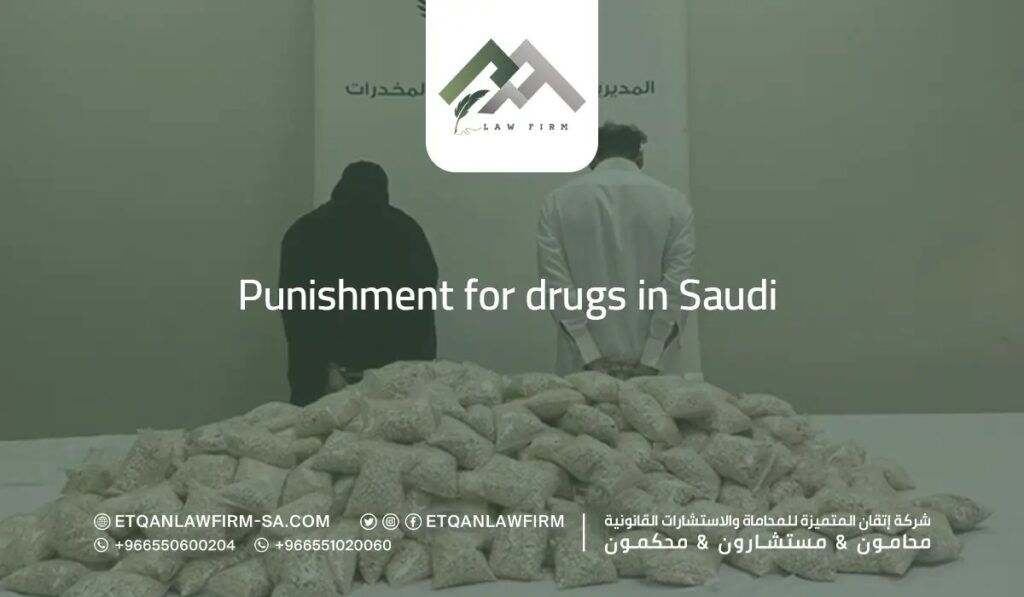
Saudi Arabia drug offense penalty tiers — Cannabis Laws in Saudi Arabia (2026): From personal use to trafficking. Source: Etqan Law Firm / Saudi Narcotics Law, 2026.
Under Article 41 of the Narcotics and Psychotropic Substances Law, first-time users face prison terms ranging from six months to two years (Etqan Law Firm, 2026). Repeat offenders, people caught in professional roles — such as law enforcement officers or medical professionals — face escalated punishments. Traffickers and large-scale smugglers face execution, carried out by public beheading.
Foreigners caught with drugs can expect deportation added to their sentences, after serving prison time. There are no exceptions for tourists claiming ignorance of the law.
ORIGINAL DATA: Saudi Arabia carried out 356 executions total in 2025 — its second consecutive annual record — with 243 officially attributed to drug-related convictions, according to an AFP tally published in January 2026. This is more than twice the number of executions recorded in 2022 before the drug-execution moratorium ended.
Can You Bring CBD Oil Into Saudi Arabia? The 2026 Answer
This is one of the most frequently searched queries from travelers preparing for Saudi Arabia — and the answer is a hard no. CBD oil, hemp extract, cannabis gummies, THC-free vape cartridges, and any other cannabis-derived supplement are treated as controlled narcotics at Saudi customs.
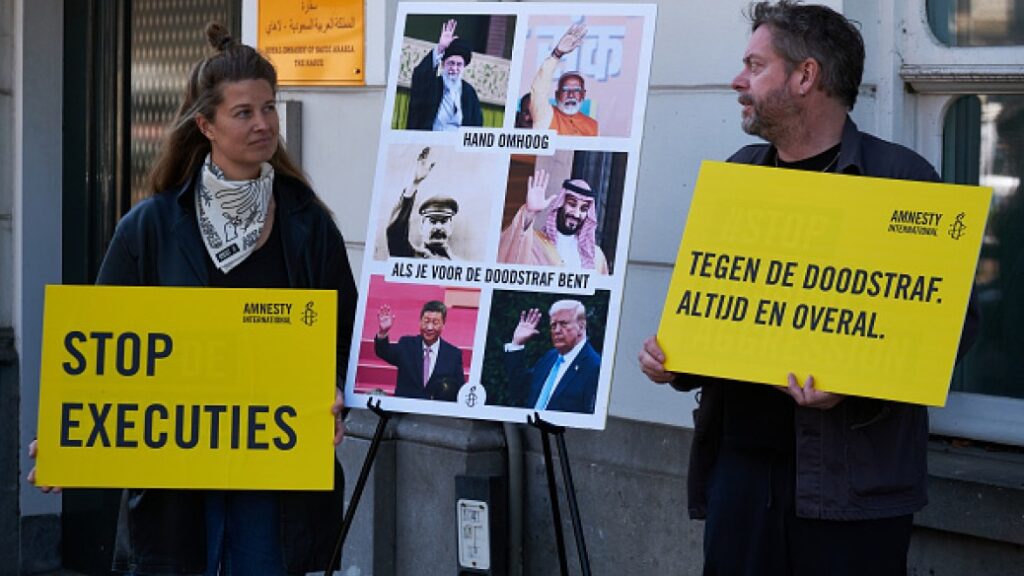
Saudi Arabia and the UAE both maintain zero-tolerance CBD enforcement in 2025–2026, with active airport screening and routine mail seizures (cannabisregulations.ai, Cannabis Laws in Saudi Arabia (2026)). Critically:
- “THC-free” is not a legal defense. Customs officials do not calibrate penalties against a 0.3% THC threshold the way U.S. or EU customs might.
- Labels trigger enforcement, not lab reports. A product packaging the word “CBD” or “hemp extract” can be seized regardless of your certificate of analysis.
- Airport screening is active — covering carry-on bags, checked baggage, and sometimes residue swab tests.
- Mail interdictions are routine. International parcels are opened, sampled, and referred to law enforcement.
The U.S. State Department travel advisory explicitly warns that Saudi Arabia does not allow importation of marijuana or CBD products “even if prescribed by a medical provider” and that a blood test showing prior cannabis use consumed before travel can lead to arrest (Travel.State.gov, 2026).
The distinction between hemp-derived CBD and recreational marijuana — one that protects travelers in U.S. airports or European customs — does not exist in Saudi Arabia (cannabisregulations.ai, 2026).
Saudi Arabia’s enforcement framework makes no legal or chemical distinction between CBD and THC. “THC-free” labeling provides no protection at customs. Airport and mail screening is active and results in seizures and criminal referrals. This applies to wellness products, supplements, and prescribed medicines alike. Source: U.S. State Department (2026); cannabisregulations.ai (2025).
What to do instead: Leave all cannabis-derived products at home. If you rely on CBD for a medical condition, consult your physician about alternatives that are permitted in Saudi Arabia. For any required prescription medications, carry original packaging and documentation and verify with the Saudi Embassy before travel.
Saudi Arabia’s Record Drug Executions: What the Data Shows
Cannabis Laws in Saudi Arabia (2026) – The scale of Saudi Arabia’s drug enforcement is extraordinary — and accelerating. The numbers from 2024–2025 represent a historic escalation:Saudi Arabia Drug Executions: 2022–2025(Source: AFP tally, Amnesty International, Harm Reduction International)
Drug-related executions in Saudi Arabia, 2022–2025. The 2025 figure of 243 is the highest ever recorded. Source: AFP / Malay Mail (Jan 2026); Amnesty International (July 2025).
Between January 2014 and June 2025, Saudi Arabia executed 1,816 people in total. Nearly one in three were executed for drug-related offenses — and of that group, 75% were foreign nationals (Amnesty International, July 2025).
In June 2025 alone, 46 people were executed — 37 of them for drug-related offenses, averaging more than one drug execution per day. Thirty-four of those 37 were foreign nationals from Egypt, Ethiopia, Jordan, Nigeria, Pakistan, Somalia, and Syria.
Nationalities particularly affected over the decade include 155 Pakistanis, 66 Syrians, and 50 Jordanians among others.
The moratorium on drug executions that Saudi Arabia had maintained roughly from 2019 to late 2022 — sometimes cited as part of Crown Prince Mohammed bin Salman’s reform image — ended abruptly in November 2022. Since then, executions have surged each consecutive year to new records.
ORIGINAL DATA: Saudi Arabia’s 2025 drug execution count of 243 represents a roughly 300% increase from the approximate pre-moratorium baseline of 59 in 2018 (Harm Reduction International), making it statistically the most aggressive drug enforcement period in the Kingdom’s recent history.
Border Seizures: How Smuggling Attempts Are Intercepted
Saudi Arabia’s land borders — particularly in the south — are flashpoints for drug smuggling interdiction. The General Directorate of Narcotics Control (GDNC), working alongside the Saudi Zakat, Tax and Customs Authority (ZATCA) and the Border Guards, operates a layered enforcement system at every entry point.
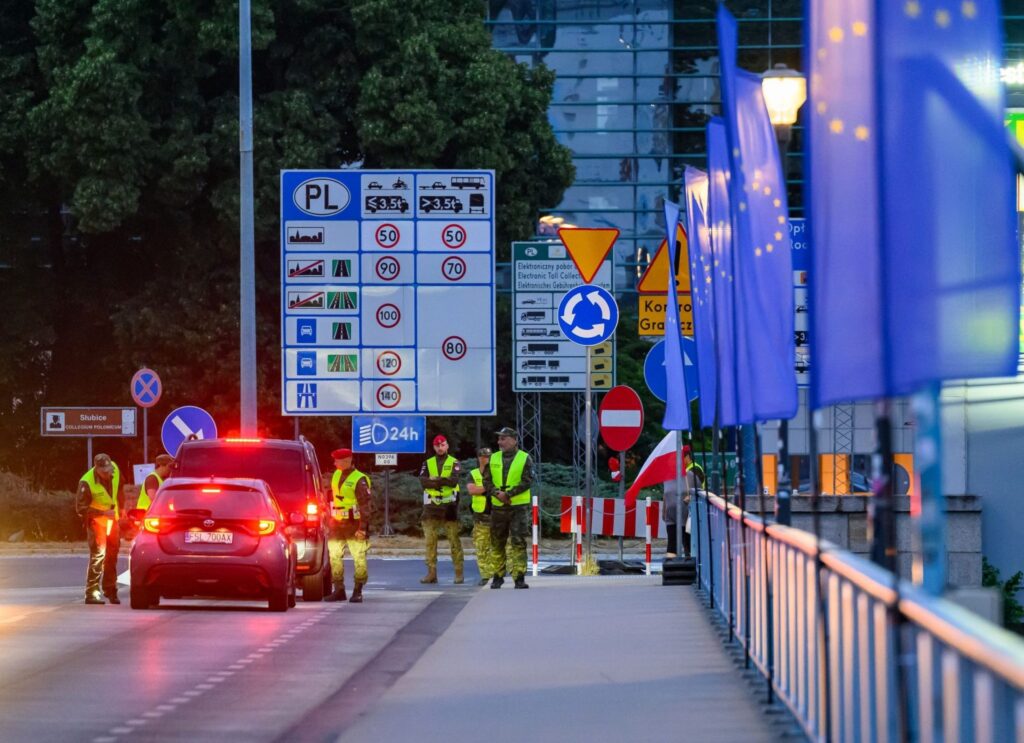
Key facts about border enforcement in 2025:
- In 2025, the ZATCA reported seizing 24 million narcotic and prohibited pills and 1,417 kg of other prohibited substances across land, air, and sea ports (Arab News PK, January 2026).
- Customs operations at Saudi ports recorded 1,371 seizures of prohibited items in a single week during peak enforcement periods (Arab News, November 2025).
- Cannabis is frequently hidden in vehicle cavities at land crossings like Al-Wadiah (on the Yemen border), concealed within modified rooftops, spare tires, and cargo compartments.
- The southern border regions of Jazan, Najran, and Asir see the heaviest cannabis smuggling attempts, primarily from Yemen-connected routes.
The GDNC also works regionally — in one notable 2025 operation, Saudi intelligence shared information with UAE counterparts to thwart a cross-border amphetamine smuggling ring involving 89,760 pills hidden in clothing accessories.
Advanced detection technologies — including X-ray scanning, chemical sampling, and intelligence-led targeting — are increasingly deployed at all major entry points.
Saudi Arabia’s 2025 customs enforcement resulted in 24 million pill seizures and over 1,400 kg of prohibited substances across all ports of entry. The country’s southern land borders, particularly the Al-Wadiah crossing and Jazan/Asir mountain routes, are primary interception zones for cannabis trafficking from Yemen. Source: Saudi Zakat, Tax and Customs Authority via Arab News (January 2026).
Digital Surveillance: Can You Even Discuss Cannabis Online in Saudi Arabia?
Here’s a dimension of the topic that surprises many international visitors and digital nomads: Saudi Arabia doesn’t just criminalize cannabis possession — it actively monitors and prosecutes online speech related to drugs.
Saudi Arabia scored only 24 out of 100 on Freedom House’s Freedom on the Net index, placing it firmly in the “Not Free” category (Freedom House, 2024). Authorities regularly monitor websites, blogs, chat rooms, social media platforms, emails, and text messages.
In 2025, Saudi Arabia’s General Commission for Audiovisual Media (GCAM) introduced sweeping 2025 Media Rules that explicitly ban “divisive content” and apply to both citizens and foreigners posting from Saudi Arabia (Mimeta, 2025). The rules are actively enforced and penalties range from fines to account suspension to criminal referrals.
What this means for cannabis-adjacent social media activity:
- “Stoner humor” posts or cannabis-use content shared from within the Kingdom can trigger account investigations.
- Tagging Saudi Arabia locations in drug-related posts compounds risk.
- Old social media posts critical of Saudi Arabia’s government or laws — posted even before traveling — can lead to arrest or detention upon entry. The U.S. State Department explicitly warns about this (Travel.State.gov, 2026).
- Influencers and content creators who’ve previously produced cannabis-related content should carefully review their public profiles before entering the Kingdom.
Saudi Arabia has invested heavily in high-tech surveillance infrastructure, and authorities increasingly rely on advanced spyware to monitor internet users both domestically and abroad (Freedom House, 2024).
Frequently Asked Questions – Cannabis Laws in Saudi Arabia (2026)
Is medical cannabis legal in Saudi Arabia?
No. Saudi Arabia makes no legal distinction between recreational and medical cannabis. Medical cannabis prescriptions issued abroad — including in countries where it’s fully legal — carry no weight at Saudi customs or in Saudi courts. Travelers relying on cannabis-based medications should consult their doctor about compliant alternatives before travel.
Can I be arrested at a Saudi airport if I consumed cannabis before flying?
Yes. The U.S. State Department explicitly warns that if a blood test in Saudi Arabia detects illicit substances consumed before travel, an arrest can still occur (Travel.State.gov, 2026). Cannabis remains detectable in blood for days to weeks depending on consumption patterns.
What happens to foreign nationals caught with drugs in Saudi Arabia?
Foreign nationals face the same criminal penalties as Saudi citizens, often plus deportation after serving their sentence. Between 2014 and 2025, 75% of those executed for drug offenses were foreign nationals (Amnesty International, 2025). Nationalities from Pakistan, Syria, Jordan, Egypt, and others have been disproportionately affected.
Does Saudi Arabia distinguish between CBD and THC?
No. Saudi law makes no distinction between cannabidiol (CBD) and tetrahydrocannabinol (THC). All cannabis derivatives are classified as prohibited narcotics. Labeling a product “THC-free” or “hemp-derived” provides zero legal protection at Saudi customs (cannabisregulations.ai, 2026).
Is it legal to talk about or joke about cannabis on social media in Saudi Arabia?
Technically, there is no law specifically naming “cannabis jokes” as illegal — but Saudi Arabia’s broad cyber laws and 2025 media regulations prohibit content deemed divisive or incompatible with national regulations. Social media posts promoting substance use risk account bans, criminal investigation, and prosecution. Foreign nationals have been arrested for social media posts made before even entering the country.
Conclusion: Cannabis Laws in Saudi Arabia (2026)
The picture in 2026 is stark and unambiguous. Saudi Arabia is executing people for drug offenses at the highest rate in its recorded history — 243 drug-related executions in 2025 alone. Foreign nationals are disproportionately bearing the consequences, accounting for three quarters of all drug-related executions over the past decade.
For travelers and expatriates, the practical takeaways are simple:
- Leave all cannabis-derived products at home — including CBD oil, hemp supplements, and edibles — regardless of their legality in your home country.
- Do not assume medical exemptions apply. Saudi Arabia does not honor foreign prescriptions for cannabis-derived medications.
- Be aware of your digital footprint. Old social media posts and online activity can be reviewed at the border.
- Understand that ignorance of the law is not a defense in Saudi courts.
Saudi Arabia’s General Directorate of Narcotics Control is well-funded, technologically advanced, and operating under explicit government direction to escalate enforcement. The Kingdom’s “war on drugs” is not a slogan — it’s a measurable, documented reality with the highest stakes imaginable.